Screaming Frog vs Sitebulb 2026: Which SEO Crawler Is Better? Group Buy 2026: SEO Domination for $0.99
Choosing the right SEO crawler can make or break your technical SEO workflow. In the Screaming Frog vs Sitebulb debate, both tools have earned loyal followings — but they serve different kinds of users. Screaming Frog is the veteran powerhouse favored by seasoned SEOs, while Sitebulb has rapidly gained traction with its visual, insight-driven approach to site auditing.
In this comprehensive 2026 comparison, we’ll break down every important detail — features, pricing, ease of use, crawl capabilities, reporting, and more — so you can decide which SEO crawler deserves a spot in your toolkit. If you’re also exploring affordable ways to access premium SEO software, be sure to check out our guide on group buy SEO tools.
Screaming Frog vs Sitebulb: Quick Overview
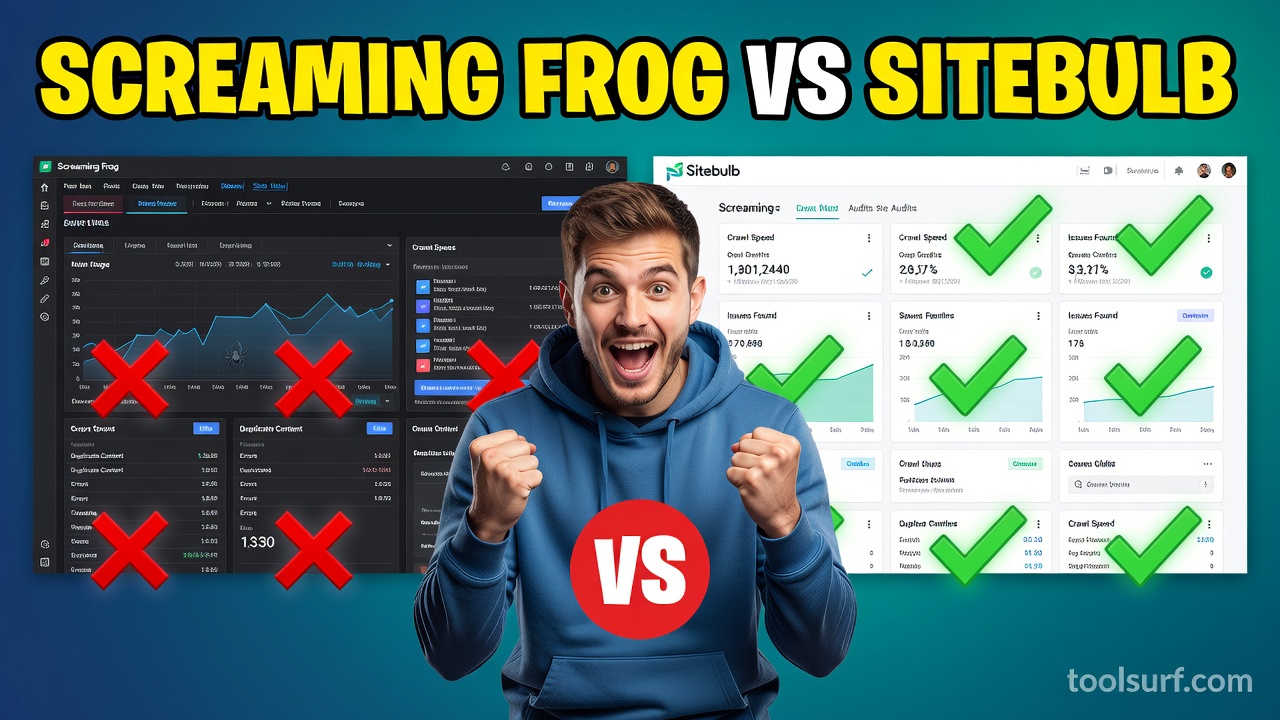
Before we dive into the details, here’s a high-level snapshot of how Screaming Frog and Sitebulb compare in 2026:
| Criteria | Screaming Frog | Sitebulb |
|---|---|---|
| Type | Desktop-based crawler | Desktop-based crawler |
| First Released | 2010 | 2017 |
| Best For | Advanced technical SEOs | Visual learners & agencies |
| Free Version | Yes (500 URL limit) | Yes (limited audits) |
| Starting Price | £199/year (~$249) | $144/year (Lite) |
| Operating System | Windows, macOS, Linux | Windows, macOS |
| Crawl Speed | Very fast | Fast |
| Learning Curve | Steep | Moderate |
Both tools are desktop-based crawlers, meaning they run on your local machine rather than in the cloud. This gives you more control over your data but also means crawl speed depends partly on your hardware and internet connection.
Feature-by-Feature Comparison 2026
Let’s look at how Screaming Frog and Sitebulb stack up across the core features that matter most for technical SEO audits.
Site Crawling & Configuration
Screaming Frog has long been the gold standard for configurable crawling. You can control virtually every aspect of the crawl — user-agent strings, crawl speed, URL handling, robots.txt adherence, and much more. It supports list mode (crawl specific URLs), spider mode, and allows you to crawl JavaScript-rendered pages via its built-in Chromium integration.
Sitebulb also provides robust crawl configuration, though it simplifies the setup with a wizard-style interface. You select what kind of audit you want to run — accessibility, content, links, performance — and Sitebulb adjusts crawl settings accordingly. It also supports JavaScript rendering and offers headless Chrome crawling out of the box.
On-Page SEO Analysis
Both crawlers identify standard on-page issues like missing title tags, duplicate meta descriptions, thin content, missing H1 tags, and broken canonical tags. Where they differ is in presentation. Screaming Frog presents raw data in spreadsheet-style tabs that you filter and export. Sitebulb categorizes issues by severity (Critical, High, Medium, Low) and provides written explanations of what each issue means and how to fix it — a huge time-saver for less experienced users and client reporting.
Internal Linking & Site Architecture
Screaming Frog offers a powerful internal link analysis module, including crawl depth visualization, link score distribution, and inlink/outlink counts for every page. Its “Crawl Path” feature shows how the spider reaches each URL.
Sitebulb takes site architecture visualization further with interactive tree graphs, crawl maps, and internal link flow diagrams. These visuals are not just eye-candy — they genuinely help you spot orphan pages, excessive crawl depth, and link equity distribution problems at a glance. For agencies that need to communicate findings to non-technical clients, Sitebulb’s visuals are a significant advantage.
Structured Data & Schema Validation
Screaming Frog can extract and validate structured data (JSON-LD, Microdata, RDFa) and flag errors. Sitebulb provides similar schema validation but layers on actionable hints, such as “This page has FAQ schema with zero questions,” making it easier to spot and fix schema issues without switching to Google’s Rich Results Test.
Log File Analysis
One area where Screaming Frog has a clear edge is log file analysis. You can import server log files directly into the tool, overlay crawl data with Googlebot activity, and identify pages that search engines are crawling (or ignoring). Sitebulb does not currently offer log file analysis, which is a notable gap for enterprise-level SEOs who rely on log data to optimize crawl budgets.
Accessibility Auditing
Sitebulb introduced accessibility auditing in recent updates, checking pages against WCAG guidelines and flagging issues like missing alt text, low contrast ratios, and improper ARIA attributes. Screaming Frog can check for missing alt text and basic accessibility markers, but it doesn’t offer a dedicated accessibility audit module. If web accessibility compliance is part of your workflow, Sitebulb has the advantage here.
| Feature | Screaming Frog | Sitebulb |
|---|---|---|
| JavaScript Rendering | ✅ Chromium-based | ✅ Headless Chrome |
| Custom Extraction | ✅ XPath, CSS, Regex | ✅ XPath, CSS |
| Structured Data Validation | ✅ | ✅ (with hints) |
| Log File Analysis | ✅ | ❌ |
| Accessibility Audit | Basic | ✅ WCAG checks |
| Issue Prioritization | Manual filtering | ✅ Auto-prioritized |
| Site Architecture Visuals | Basic diagrams | ✅ Interactive graphs |
| Spelling & Grammar | ❌ | ✅ |
| Core Web Vitals | ✅ (via API) | ✅ (via API) |
Crawl Performance & Speed in 2026
Speed matters when you’re auditing large websites. Screaming Frog has always been known for its blazing crawl speed. On a decent machine with a solid internet connection, it can crawl thousands of URLs per minute. You can fine-tune threads, crawl delay, and memory allocation to maximize throughput.
Sitebulb is no slouch either, but it tends to be slightly slower on very large sites (100K+ URLs) because it’s doing more processing per URL — generating hints, calculating scores, and building visualizations in real-time. For small-to-medium sites (under 50,000 pages), the speed difference is negligible.
Both tools allow you to pause and resume crawls, which is essential for large audits. Screaming Frog stores crawl data in its own database format, while Sitebulb saves audits as project files that you can revisit and compare over time — a useful feature for tracking audit progress across months.
User Interface & Usability
This is perhaps the most polarizing difference between the two tools.
Screaming Frog’s UI is functional but utilitarian. It’s essentially a giant data table with multiple tabs — Response Codes, Page Titles, Meta Descriptions, H1, H2, Images, and so on. Power users love this because everything is accessible and exportable. But for newcomers, the interface can be overwhelming. There’s no guided workflow; you need to know what you’re looking for.
Sitebulb’s UI was designed from the ground up to be intuitive. When you run an audit, you get a dashboard summarizing key findings with charts, severity ratings, and written recommendations. Each issue links to an explanation page that tells you why it matters and how to fix it. This makes Sitebulb incredibly friendly for freelancers, small agencies, and in-house marketers who don’t have deep technical SEO backgrounds.
If you value raw data access and maximum flexibility, Screaming Frog wins. If you prefer a guided, insight-first experience with less manual work, Sitebulb is the clear choice.
Reporting & Data Visualization
Reporting is another area where Sitebulb shines. It generates polished, client-ready PDF reports with charts, prioritized issue lists, and actionable recommendations — all with minimal effort on your part. You can customize reports with your own branding, making them perfect for agency use.
Screaming Frog, by contrast, relies on data exports (CSV, Excel, Google Sheets) and manual report building. While you can create extremely detailed custom reports, the process requires more time and effort. Screaming Frog does offer some built-in visualizations — crawl tree graphs, directory tree charts — but they’re basic compared to Sitebulb’s interactive visual reports.
For teams that need to produce beautiful audit reports quickly, Sitebulb saves hours of work per project. If you already have a reporting template or BI tool set up, Screaming Frog’s raw data exports may actually be more useful.
Integrations & API Access in 2026
Both tools integrate with major platforms, but Screaming Frog offers broader API connectivity:
| Integration | Screaming Frog | Sitebulb |
|---|---|---|
| Google Analytics | ✅ GA4 | ✅ GA4 |
| Google Search Console | ✅ | ✅ |
| PageSpeed Insights | ✅ | ✅ |
| Ahrefs | ✅ | ❌ |
| Majestic | ✅ | ❌ |
| Moz | ✅ | ❌ |
| Google Looker Studio | Via export | Via export |
| Command Line / Automation | ✅ | ❌ |
Screaming Frog’s command-line interface is a game-changer for automation. You can schedule crawls via Task Scheduler or cron jobs, export results automatically, and integrate the tool into larger SEO workflows and CI/CD pipelines. This is something Sitebulb simply doesn’t offer, and it’s a major consideration for enterprise SEO teams and developers.
For a deeper look at tools that pair well with crawlers — including keyword research and backlink analysis platforms — read our Semrush review.
Pricing Comparison 2026
Budget is always a factor, so let’s compare the current pricing for both SEO crawlers in 2026:
| Plan | Screaming Frog | Sitebulb |
|---|---|---|
| Free Tier | 500 URLs per crawl | Limited free audits |
| Entry-Level Paid | £199/year (~$249) | $144/year (Lite) |
| Pro / Full | Single tier — all features | $344/year (Pro) |
| Multi-User Discounts | Yes (volume licensing) | Yes (team plans) |
| URL Limit (Paid) | Unlimited | Unlimited (Pro) |
At first glance, Sitebulb’s Lite plan at $144/year looks like the most affordable option. However, the Lite plan limits the number of audit features and URLs per project. Sitebulb’s Pro plan at $344/year is more expensive than Screaming Frog’s single-tier license, but it includes all features, including the visual reports and accessibility auditing that many users value.
Screaming Frog keeps things simple with one paid tier at roughly $249/year that unlocks everything — unlimited crawling, all integrations, log file analysis, and command-line access. There are no feature gates, which many users appreciate.
If you’re looking to slash costs even further, consider accessing premium SEO tools through a best group buy SEO tools service. Platforms like Toolsurf let you access expensive tools at a fraction of their retail price, making enterprise-grade SEO affordable for freelancers and small businesses.
Screaming Frog: Pros & Cons
✅ Pros
- Extremely fast crawling engine
- Unmatched crawl configuration options
- Log file analysis built-in
- Command-line automation support
- Broad third-party API integrations
- Single pricing tier — no feature gating
- Cross-platform (Windows, macOS, Linux)
- Generous free version (500 URLs)
❌ Cons
- Steep learning curve for beginners
- UI feels dated and overwhelming
- No built-in client reporting
- No actionable recommendations or hints
- Data interpretation requires expertise
- No accessibility auditing module
Sitebulb: Pros & Cons
✅ Pros
- Beautiful, intuitive user interface
- Auto-prioritized issues with severity ratings
- Written explanations and fix recommendations
- Stunning visual reports and crawl maps
- Client-ready PDF reports with branding
- Accessibility (WCAG) auditing
- Easier learning curve for non-technical users
❌ Cons
- No log file analysis
- Fewer third-party integrations
- No command-line or automation support
- Pro plan is more expensive than Screaming Frog
- Slower on very large sites (100K+ URLs)
- No Linux support
Who Should Use Which Tool in 2026?
Choose Screaming Frog If You…
- Are an experienced technical SEO who values raw data and flexibility
- Need to crawl very large websites (100K–1M+ URLs) efficiently
- Want log file analysis to optimize crawl budgets
- Need command-line automation for scheduled audits and CI/CD integration
- Require deep integrations with Ahrefs, Majestic, or Moz APIs
- Are comfortable building your own reports from exported data
- Use Linux as your primary operating system
Choose Sitebulb If You…
- Prefer a visual, guided approach to site auditing
- Run an agency and need polished, client-ready reports fast
- Want actionable recommendations instead of raw data dumps
- Need accessibility auditing baked into your workflow
- Are newer to technical SEO and want built-in learning resources
- Audit small-to-medium websites (under 50K pages)
- Value beautiful data visualizations and crawl maps
Use Both If You…
Many professional SEOs actually use both tools. Screaming Frog handles the heavy-duty crawling, data extraction, and log file analysis, while Sitebulb produces the visual reports and client-facing deliverables. If your budget allows, combining them covers all bases. And with affordable access through group buy SEO tools, you don’t necessarily have to choose just one.
🏆 Toolsurf Verdict: Get Both Crawlers for Less with Toolsurf Group Buy
The Screaming Frog vs Sitebulb debate ultimately comes down to your workflow style. Screaming Frog is the power user’s dream — fast, flexible, and endlessly configurable. Sitebulb is the polished alternative that turns complex data into actionable insights and beautiful reports with minimal effort.
But here’s the thing: you don’t have to break the bank to access either tool. With Toolsurf group buy, you can get premium SEO tools — including crawlers, keyword research platforms, backlink analyzers, and more — at a fraction of the retail cost. Instead of paying full price for individual licenses, Toolsurf pools resources so freelancers, small agencies, and budget-conscious marketers can access the same professional-grade tools that enterprise teams use.
Why choose Toolsurf group buy?
- Access Screaming Frog, Sitebulb, Ahrefs, Semrush, and 50+ other premium SEO tools
- Plans start from just a few dollars per month
- No long-term commitments — flexible monthly billing
- Instant access after signup — start auditing within minutes
- Dedicated support and regular tool updates
Stop overpaying for SEO tools. Visit Toolsurf today and unlock the full power of Screaming Frog, Sitebulb, and dozens of other tools at unbeatable prices.
Frequently Asked Questions: Screaming Frog vs Sitebulb 2026
1. Is Screaming Frog better than Sitebulb for large websites?
Yes, generally speaking. Screaming Frog’s crawl engine is optimized for speed and can handle sites with hundreds of thousands or even millions of URLs more efficiently than Sitebulb. Its memory management and threading options also give you more control over resource allocation during large crawls. Sitebulb performs well on small-to-medium sites but may slow down on enterprise-scale audits due to its real-time analysis and visualization processing.
How to Buy Screaming Frog Vs Sitebulb at an Affordable Price from Toolsurf.com
Getting access to premium tools like Screaming Frog Vs Sitebulb doesn’t have to break the bank. Here’s how to get it through Toolsurf:
- Visit the Toolsurf Store: Go to tools.toolsurf.com/cart
- Search for the Product: Search for “Screaming Frog Vs Sitebulb” and click on “Buy Now”
- Complete Your Purchase: Enter your details and complete the purchase process
That’s it! You’ll have access within minutes.
Why Choose Toolsurf to Buy Screaming Frog Vs Sitebulb?
- 💰 Save Up to 99% on Premium Tools
- ⚡ Get Access in Under 2 Minutes
- 🔒 99.9% Uptime Guarantee
- 💸 24-Hour Money-Back Guarantee
- 🎧 Avg. 5-Minute Response Time for Support
👉 Get Screaming Frog Vs Sitebulb at Toolsurf Now
2. Can beginners use Screaming Frog effectively?
Screaming Frog has a steeper learning curve compared to Sitebulb. While it’s incredibly powerful, it presents data in raw spreadsheet-style tabs without built-in explanations or recommendations. Beginners can certainly learn it — there are excellent tutorials and community resources available — but it takes more time to become proficient. Sitebulb is generally considered more beginner-friendly because it prioritizes issues automatically and explains what each finding means.
3. Does Sitebulb offer a free version in 2026?
Yes, Sitebulb offers a limited free trial that allows you to run a small number of audits. However, the free version restricts the number of URLs you can crawl and the features you can access. For unlimited crawling and full feature access, you’ll need either the Lite plan ($144/year) or the Pro plan ($344/year). Alternatively, you can access Sitebulb affordably through a Toolsurf group buy plan.
4. Which tool has better reporting capabilities?
Sitebulb wins decisively on reporting. It generates professional, branded PDF reports with charts, prioritized issue lists, and clear recommendations — ready to share with clients immediately. Screaming Frog requires you to export data to CSV or Excel and build reports manually, which is more time-consuming but also more customizable if you have your own reporting framework.
5. Can I automate crawls with Screaming Frog?
Yes. Screaming Frog offers a command-line interface that enables you to schedule automated crawls using tools like Windows Task Scheduler or Linux cron jobs. You can configure the tool to crawl specific sites, export results in predefined formats, and even integrate the output into CI/CD pipelines or monitoring dashboards. This automation capability is one of Screaming Frog’s strongest differentiators — Sitebulb does not offer command-line or automation features.
6. Do Screaming Frog and Sitebulb support JavaScript rendering?
Yes, both tools support JavaScript rendering in 2026. Screaming Frog uses an embedded Chromium browser engine to render JavaScript-heavy pages, while Sitebulb uses headless Chrome for the same purpose. This is critical for auditing modern websites built with frameworks like React, Angular, or Vue.js, where content is loaded dynamically via JavaScript.
7. What is a group buy, and how can I use it to access these tools?
A group buy is a service where multiple users share access to premium software subscriptions at a reduced cost. Instead of each person paying full price for an individual license, the cost is distributed among the group. Toolsurf is a trusted group buy provider that offers access to Screaming Frog, Sitebulb, and 50+ other SEO tools at a fraction of the retail price. It’s an excellent option for freelancers, startups, and small agencies working with tight budgets.
8. Can I use Screaming Frog and Sitebulb together?
Absolutely. Many professional SEOs use both tools in tandem. A common workflow is to run the initial crawl with Screaming Frog for speed and deep data extraction, then use Sitebulb for a secondary audit focused on visualization, issue prioritization, and client-ready reporting. Using both tools together gives you the best of both worlds — Screaming Frog’s raw power and configurability, combined with Sitebulb’s intuitive insights and polished presentation.
Final Thoughts: Screaming Frog vs Sitebulb 2026
There’s no single “best” SEO crawler — the right choice depends on your skill level, workflow, team size, and budget. Screaming Frog remains the go-to tool for power users who need maximum speed, configurability, and advanced features like log file analysis and command-line automation. Sitebulb is the smarter choice for agencies, visual thinkers, and anyone who values guided insights and beautiful reports over raw data flexibility.
If you’re building out a comprehensive SEO stack in 2026, pair your crawler with strong keyword research and backlink analysis tools. Our roundup of the best group buy SEO tools can help you find the right combination without overspending.
Whichever crawler you choose, the most important thing is to actually use it consistently. Regular technical audits are the backbone of sustainable organic growth. Set up monthly crawl schedules, track issue trends over time, and prioritize fixes based on impact. Your rankings — and your clients — will thank you.
Related Products & Resources
- Shutterstock Private Account
- Picmonkey Group Buy
- Animoto Group Buy
- Piktochart Group Buy
- Magisto Group Buy