
Moz Pro Group Buy 2026: Premium SEO Suite for $0.99
Choosing between Moz and SpyFu is a common dilemma for marketers who want solid SEO insights without subscribing to every tool on the market. Both platforms have been around for years, both have loyal fanbases, and both offer genuinely useful features.
But they’re also very different tools at their core.
Moz is a well-rounded SEO suite built for organic search optimization. SpyFu, on the other hand, was originally designed as a competitive intelligence tool — and it still excels at showing you exactly what your competitors are doing in both organic and paid search.
In this comprehensive comparison, we’ll dig into every aspect of Moz Pro vs SpyFu in 2025 — from keyword research and backlink analysis to pricing and ease of use — so you can decide which one deserves your budget.
Moz vs SpyFu: Quick Comparison Table
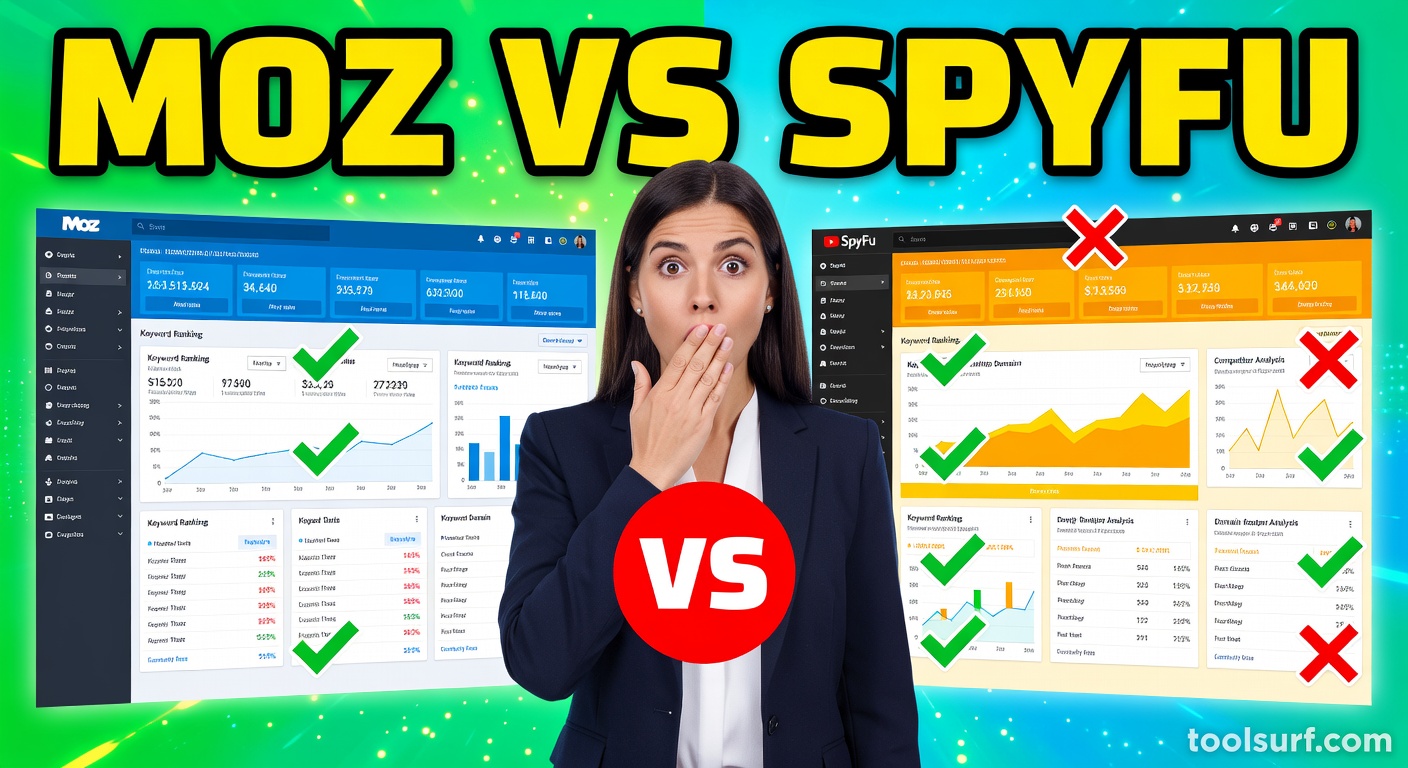
Before we dive deep, here’s a side-by-side snapshot of how these two tools compare across key categories:
| Feature | Moz Pro | SpyFu |
|---|---|---|
| Starting Price | $49/month (Starter) | $39/month (Basic) |
| Free Plan | Limited (Moz Free tools) | Limited free searches |
| Keyword Research | Strong (Keyword Explorer) | Strong (with competitor focus) |
| Backlink Analysis | Excellent (Link Explorer) | Basic |
| Competitor Analysis | Good | Excellent (core strength) |
| PPC / Ad Research | ❌ Not available | ✅ Excellent (unique strength) |
| Rank Tracking | ✅ Included in all plans | ✅ Included in all plans |
| Site Audit | ✅ Comprehensive | ❌ Not available |
| Domain Authority | ✅ DA (industry standard) | Domain Strength metric |
| Historical Data | Limited | Extensive (15+ years) |
| Ease of Use | Beginner-friendly | Very beginner-friendly |
| Best For | All-around SEO | Competitor & PPC research |
Now let’s break down each category in detail.
Keyword Research: Moz vs SpyFu
Moz Keyword Explorer
Moz’s Keyword Explorer is one of the most intuitive keyword research tools available. Enter a seed keyword, and you’ll get a clean breakdown including:
- Monthly search volume with accuracy ranges
- Keyword difficulty score (0-100) based on the strength of ranking pages
- Organic CTR estimates — how likely users are to click organic results
- Priority score — Moz’s proprietary metric that combines volume, difficulty, and CTR into a single actionable number
- SERP analysis — see exactly what’s ranking and why
How to Buy Moz Vs Spyfu at an Affordable Price from Toolsurf.com
Getting access to premium tools like Moz Vs Spyfu doesn’t have to break the bank. Here’s how to get it through Toolsurf:
- Visit the Toolsurf Store: Go to tools.toolsurf.com/cart
- Search for the Product: Search for “Moz Vs Spyfu” and click on “Buy Now”
- Complete Your Purchase: Enter your details and complete the purchase process
That’s it! You’ll have access within minutes.
Why Choose Toolsurf to Buy Moz Vs Spyfu?
- 💰 Save Up to 99% on Premium Tools
- ⚡ Get Access in Under 2 Minutes
- 🔒 99.9% Uptime Guarantee
- 💸 24-Hour Money-Back Guarantee
- 🎧 Avg. 5-Minute Response Time for Support
👉 Get Moz Vs Spyfu at Toolsurf Now
The Priority score is genuinely useful. Instead of manually weighing volume against difficulty, Moz does the math for you. For a deeper look at everything Moz offers, check out this detailed Moz review.
SpyFu Keyword Research
SpyFu approaches keyword research from a competitor-first angle. Rather than starting with a seed keyword, SpyFu’s most powerful workflow is entering a competitor’s domain and seeing every keyword they rank for — both organic and paid.
You get:
- Every keyword a domain ranks for (organic and PPC)
- Keyword ranking history going back 15+ years
- Estimated monthly clicks and cost-per-click
- Keyword groups — automatically clustered by topic
- Shared keywords — see which keywords you and competitors both target
If you already know who your competitors are and want to reverse-engineer their strategy, SpyFu is incredibly powerful. For a comprehensive overview, read our full SpyFu review.
Winner: It Depends
Moz wins for traditional keyword discovery when you’re starting from scratch or exploring new topics. SpyFu wins for competitive keyword intelligence when you want to see exactly what’s working for your rivals. They serve different use cases rather than directly competing.
Backlink Analysis: Link Explorer vs SpyFu Backlinks
Moz Link Explorer
Moz’s Link Explorer is one of the strongest backlink tools in the SEO industry. It crawls the web with a massive link index and provides:
- Domain Authority (DA) — the industry-standard metric for measuring a site’s link profile strength
- Page Authority (PA) — same concept at the page level
- Spam Score — identifies potentially toxic backlinks
- Linking domains and inbound links — with detailed anchor text analysis
- Link intersect — find sites linking to competitors but not to you
- Discovered and lost links — track new and dropped backlinks over time
Domain Authority has become so widely used that it’s essentially a universal SEO metric at this point. Even people who don’t use Moz check DA scores.
SpyFu Backlinks
SpyFu offers a backlink analysis feature, but it’s noticeably more basic compared to Moz. You can view backlinks pointing to any domain, filter by type, and see basic metrics. However, SpyFu’s link index is smaller, and it lacks the depth of features found in Moz’s Link Explorer.
SpyFu’s backlink tool doesn’t have an equivalent to Domain Authority or Spam Score, and the data feels more supplementary than comprehensive.
Winner: Moz (clearly)
If backlink analysis is important to your workflow, Moz wins this category hands down. That said, if you need the absolute best backlink data, tools like Ahrefs have even larger link indexes than Moz.
Competitor Analysis
SpyFu: The Competitor Research Powerhouse
This is where SpyFu truly shines — and it’s arguably the #1 reason people choose it. SpyFu was literally built for competitive analysis. Enter any domain and you instantly see:
- Every organic keyword the domain ranks for, with historical tracking
- Every PPC keyword they’re bidding on (current and historical)
- Their Google Ads spend estimates and ad copy
- Top organic competitors — who’s competing for the same keywords
- Keyword overlap analysis — visualize shared vs unique keywords between domains
- Ranking history — see how a domain’s rankings have changed over 15+ years
The historical data is SpyFu’s secret weapon. While most SEO tools show you current snapshots, SpyFu lets you look back years to understand how a competitor’s strategy evolved over time. This is invaluable for identifying trends and predicting future moves.
Moz: Solid But Not the Focus
Moz does offer competitor analysis features — you can compare domains, track competing keywords, and use the link intersect tool. But it’s clearly not Moz’s primary focus. The competitor insights feel like add-ons rather than the core product.
Winner: SpyFu (by a wide margin)
When it comes to understanding what your competitors are doing — both in organic and paid search — SpyFu is in a league of its own at this price point.
PPC & Ad Research
SpyFu: Unmatched PPC Intelligence
SpyFu’s PPC research capabilities are its most unique selling point. No other tool in this price range offers this level of paid search intelligence. With SpyFu, you can:
- See every Google Ads keyword a competitor has ever bid on
- View their actual ad copy (current and historical variations)
- Estimate their monthly ad spend
- Identify their most profitable PPC keywords
- See which ads have run the longest (indicating they’re profitable)
- Discover ad testing patterns and strategies
If you run Google Ads campaigns, SpyFu’s PPC data can literally save you thousands of dollars by showing you which keywords and ad copies are already proven to work for competitors in your space.
Moz: No PPC Features
Moz Pro is purely an organic SEO tool. It has zero PPC or paid advertising research features. If you need ad intelligence, Moz simply can’t help you.
Winner: SpyFu (Moz doesn’t compete here)
This is a category where SpyFu wins by default — and wins convincingly. For anyone who runs paid campaigns alongside SEO, SpyFu’s ad research data is worth the subscription price alone.
Site Audit
Moz Site Crawl
Moz includes a robust site audit tool (called Site Crawl) that scans your website for technical SEO issues. It identifies:
- Broken links and redirect chains
- Missing or duplicate meta tags
- Crawlability issues
- Page speed concerns
- Thin content pages
- Missing alt text and other on-page factors
Issues are prioritized by severity, making it easy to tackle the most impactful problems first. The site audit runs on a weekly schedule, so you can track improvements over time.
SpyFu: No Site Audit
SpyFu does not offer a site audit feature. If you need technical SEO diagnostics, you’ll need another tool alongside SpyFu. This is a significant gap in SpyFu’s feature set for anyone managing website health.
Winner: Moz (SpyFu doesn’t compete here)
Moz takes this category entirely. Site auditing is a core SEO function, and its absence in SpyFu is one of the platform’s biggest limitations.
Rank Tracking
Both tools offer rank tracking, but with different strengths:
Moz Rank Tracking
Moz allows you to track keyword rankings with weekly updates. You can track keywords by search engine, device type, and location. The interface is clean and the reporting integrates well with other Moz features. The Starter plan tracks up to 50 keywords, while higher-tier plans scale up significantly.
SpyFu Rank Tracking
SpyFu’s rank tracking is similar in functionality but adds the interesting ability to automatically compare your rankings with competitors side by side. You can also see historical ranking data going back years, giving you a longer-term perspective on your progress.
Winner: Tie
Both tools handle rank tracking competently. Moz has a slightly more polished interface, while SpyFu adds competitor comparison context. Neither has a clear advantage here.
Domain Authority & Metrics
Moz Domain Authority (DA)
Moz created the Domain Authority metric, and it remains one of the most widely recognized and referenced metrics in the SEO industry. DA scores range from 0-100 and predict how likely a domain is to rank in search results. While Google doesn’t use DA directly, it’s become a standard shorthand for measuring link profile strength.
Moz also provides Page Authority, Spam Score, and other proprietary metrics that give you a well-rounded view of any domain’s SEO health.
SpyFu Domain Strength
SpyFu offers its own “Domain Strength” metric, but it hasn’t gained the same industry adoption as Moz’s DA. It’s useful within SpyFu’s ecosystem for comparing competitors, but you won’t see people referencing “SpyFu Domain Strength” in outreach emails or guest post negotiations.
Winner: Moz
Moz’s DA is the industry standard. If domain metrics matter to your workflow (and they do for link building, outreach, and reporting), Moz wins here decisively.
Pricing Comparison: Moz vs SpyFu in 2025
Let’s get into the numbers — because pricing is often the deciding factor:
| Plan | Moz Pro | SpyFu |
|---|---|---|
| Entry Plan | Starter — $49/month | Basic — $39/month |
| Mid Plan | Standard — $99/month | Professional — $79/month |
| Top Plan | Large — $179/month | Team — $299/month |
| Enterprise | Premium — $299/month | — |
| Annual Discount | ~20% off with annual billing | ~33% off with annual billing |
| Free Trial | 30-day free trial | Limited free access |
Price-to-Value Assessment
SpyFu is the more affordable option at every tier. Its Basic plan at $39/month gives you unlimited search results, unlimited data exports, and unlimited projects — which is remarkable value. Most SEO tools heavily restrict data at lower tiers, but SpyFu doesn’t play that game.
Moz is pricier but more comprehensive. At $99/month for the Standard plan (the most popular), you get a full SEO suite with keyword research, link analysis, site auditing, and rank tracking. If you need all of these features in one tool, Moz can be more cost-effective than subscribing to multiple specialized tools.
For marketers watching their budget, there’s another option worth considering. Through group buy SEO tools platforms like Toolsurf, you can access premium tools like Moz, SpyFu, and other top-tier SEO software at a fraction of their regular retail price — making it possible to use both tools without doubling your expenses.
Ease of Use & Learning Curve
Moz
Moz has long been considered one of the most beginner-friendly SEO tools. The interface is clean, well-organized, and uses clear language instead of jargon. Moz also has an exceptional educational ecosystem — the Moz Blog, Whiteboard Friday videos, and the Beginner’s Guide to SEO are legendary resources.
For someone new to SEO, Moz feels welcoming rather than intimidating. The learning curve is gentle, and most features are self-explanatory.
SpyFu
SpyFu is equally easy to use, arguably even simpler. The interface is straightforward: enter a domain or keyword, and the data appears immediately. There’s no complex setup, no steep learning curve, and no confusing navigation.
The one downside is that SpyFu’s interface looks a bit dated compared to modern SaaS tools. It’s functional, but it won’t win any design awards. That said, it gets the job done efficiently.
Winner: Tie (slight edge to Moz for polish)
Both tools are genuinely easy to use. Moz has a more modern, polished interface and better educational resources. SpyFu is slightly simpler but less visually refined.
Data Accuracy & Reporting
Data Accuracy
Both Moz and SpyFu provide estimated data for keyword volumes, traffic, and other metrics. No third-party SEO tool has perfect accuracy — they all rely on clickstream data, web crawling, and statistical modeling.
In general testing and industry comparisons:
- Moz tends to be conservative with search volume estimates but highly accurate with keyword difficulty and domain metrics
- SpyFu provides broader competitive data but can sometimes overestimate traffic values, especially for smaller sites
For the most accurate data overall, tools like Semrush tend to have larger databases, but both Moz and SpyFu are reliable enough for strategic decision-making.
Reporting
Moz offers customizable PDF reports that look professional and are easy to share with clients or stakeholders. The reports integrate data from across the platform — rankings, links, site audit findings — into cohesive summaries.
SpyFu has reporting capabilities as well, but they’re more basic. You can export data and create reports, but they lack the visual polish of Moz’s output. SpyFu’s strength is in raw data export rather than presentation-ready reports.
Winner: Moz (for reporting), SpyFu (for raw data depth)
Pros and Cons
Moz Pro — Pros
- Industry-standard Domain Authority metric
- Comprehensive site audit tool
- Excellent keyword difficulty scoring
- Clean, modern interface
- Outstanding educational resources and community
- Strong backlink analysis with Link Explorer
- 30-day free trial available
Moz Pro — Cons
- More expensive than SpyFu at comparable tiers
- No PPC or advertising research features
- Limited historical data
- Data limits on lower-tier plans can be frustrating
- Smaller keyword database compared to Semrush or Ahrefs
SpyFu — Pros
- Unmatched competitor analysis for both organic and PPC
- Excellent PPC/Google Ads research (unique feature)
- 15+ years of historical data
- Unlimited searches and exports on all paid plans
- Very affordable entry price ($39/month)
- Easy to use with minimal learning curve
SpyFu — Cons
- No site audit feature
- Basic backlink analysis compared to competitors
- Dated interface design
- Domain metrics not as widely recognized as Moz’s DA
- Data accuracy can be inconsistent for smaller niches
- Limited on-page SEO recommendations
Who Should Use Moz?
Moz Pro is the better choice if you:
- Need a comprehensive, all-in-one SEO platform
- Prioritize site auditing and technical SEO health
- Value Domain Authority as a key metric for link building and outreach
- Want polished, client-ready reports
- Are new to SEO and appreciate educational resources
- Focus primarily on organic search (no PPC needs)
- Work at an agency and need to manage multiple client sites
Who Should Use SpyFu?
SpyFu is the better choice if you:
- Want deep competitive intelligence on a budget
- Run Google Ads campaigns and need PPC research data
- Want to reverse-engineer competitor organic and paid strategies
- Need unlimited data access without worrying about quotas
- Value historical ranking and advertising data
- Are a solo marketer, freelancer, or small business owner
- Want the most affordable professional SEO tool available
Can You Use Both Moz and SpyFu Together?
Absolutely — and many experienced marketers do exactly that. These tools complement each other well:
- Use SpyFu for competitor research, PPC intelligence, and historical analysis
- Use Moz for site audits, backlink analysis, DA tracking, and keyword difficulty assessment
The combined cost of SpyFu Basic ($39) + Moz Starter ($49) is $88/month — still cheaper than a single plan on some competitor tools. And if budget is a concern, Toolsurf’s group buy SEO tools service lets you access both platforms (and many others) at significantly reduced rates.
⚖️ ToolSurf Verdict
Moz Pro is the better all-around SEO suite — choose it if you need site audits, strong backlink data, Domain Authority metrics, and a polished interface. SpyFu is the unbeatable choice for competitor intelligence and PPC research at a lower price point. If you can only pick one: choose Moz if your focus is organic SEO fundamentals, or choose SpyFu if you want to spy on competitors and run Google Ads. For the best of both worlds, consider using Toolsurf’s group buy access to get both tools at a fraction of their retail cost.
Key Takeaways
- Moz Pro excels at all-around SEO: site audits, backlink analysis, Domain Authority, and keyword research
- SpyFu dominates in competitor analysis and PPC research with 15+ years of historical data
- SpyFu is more affordable ($39/mo vs $49/mo starting) and offers unlimited data access
- Moz has no PPC features; SpyFu has no site audit — they cover different gaps
- Both tools are beginner-friendly with gentle learning curves
- Using both together provides the most complete competitive and technical SEO picture
- Toolsurf group buy access makes it affordable to use both without paying full price
Frequently Asked Questions
Is SpyFu better than Moz for SEO?
It depends on your specific needs. SpyFu is better for competitor analysis and PPC research, while Moz is better for technical SEO, site auditing, and backlink analysis. Neither is objectively “better” — they serve different purposes. SpyFu is the stronger choice if competitive intelligence is your priority, while Moz is better as an all-around organic SEO platform.
Is SpyFu worth it in 2025?
Yes, SpyFu remains a solid investment in 2025, especially at its $39/month price point. Its competitor analysis and PPC research capabilities are unmatched at this price, and the unlimited data access is a major advantage. If you run Google Ads or need to understand what competitors are doing in both organic and paid search, SpyFu delivers excellent value for money.
Does Moz have PPC research features?
No, Moz Pro is exclusively focused on organic SEO. It does not offer any PPC, Google Ads, or paid search research features. If you need paid advertising intelligence, you’ll need a separate tool like SpyFu, Semrush, or SEMrush’s advertising toolkit. This is one of Moz’s most notable limitations compared to more comprehensive SEO suites.
Which tool has better backlink data — Moz or SpyFu?
Moz has significantly better backlink data through its Link Explorer tool. Moz offers Domain Authority (DA), Page Authority (PA), Spam Score, and a comprehensive link intersect feature. SpyFu’s backlink data is more basic and limited. If backlink analysis is important to your SEO strategy, Moz is the clear winner between these two tools.
Can I get Moz and SpyFu for free?
Both tools offer limited free access. Moz provides free tools including a limited version of Link Explorer and a Domain Authority checker, plus a 30-day free trial of Moz Pro. SpyFu allows a small number of free searches with limited data. For full access to either tool’s features, a paid subscription is required. Alternatively, group buy SEO tool platforms offer access to premium tools at reduced prices.
How does Moz’s pricing compare to SpyFu’s?
SpyFu is generally more affordable. SpyFu’s Basic plan starts at $39/month, while Moz’s Starter plan begins at $49/month. At the mid-tier level, SpyFu Professional costs $79/month compared to Moz Standard at $99/month. SpyFu also offers a more generous annual discount (about 33% off) compared to Moz (about 20% off). However, Moz includes site auditing and stronger backlink tools, which could make it more cost-effective if you’d otherwise need separate tools for those features.
What is SpyFu’s biggest advantage over Moz?
SpyFu’s biggest advantage is its competitor and PPC research capabilities. SpyFu allows you to enter any domain and instantly see every keyword they rank for (organic and paid), their Google Ads history, ad copy variations, and estimated ad spend — going back over 15 years. This level of competitive intelligence is unique at SpyFu’s price point and is something Moz doesn’t offer at all.
Should I use Moz or SpyFu for local SEO?
Moz has a stronger offering for local SEO. Moz Local is a separate product specifically designed for managing local business listings, NAP consistency, and local search visibility. SpyFu doesn’t have dedicated local SEO features. If local search optimization is important to your business, Moz is the better choice. However, for understanding local competitor strategies, SpyFu’s competitor analysis can still provide useful insights into what keywords local competitors are targeting.
Related Products & Resources
- Shutterstock Private Account
- Picmonkey Group Buy
- Animoto Group Buy
- Piktochart Group Buy
- Magisto Group Buy